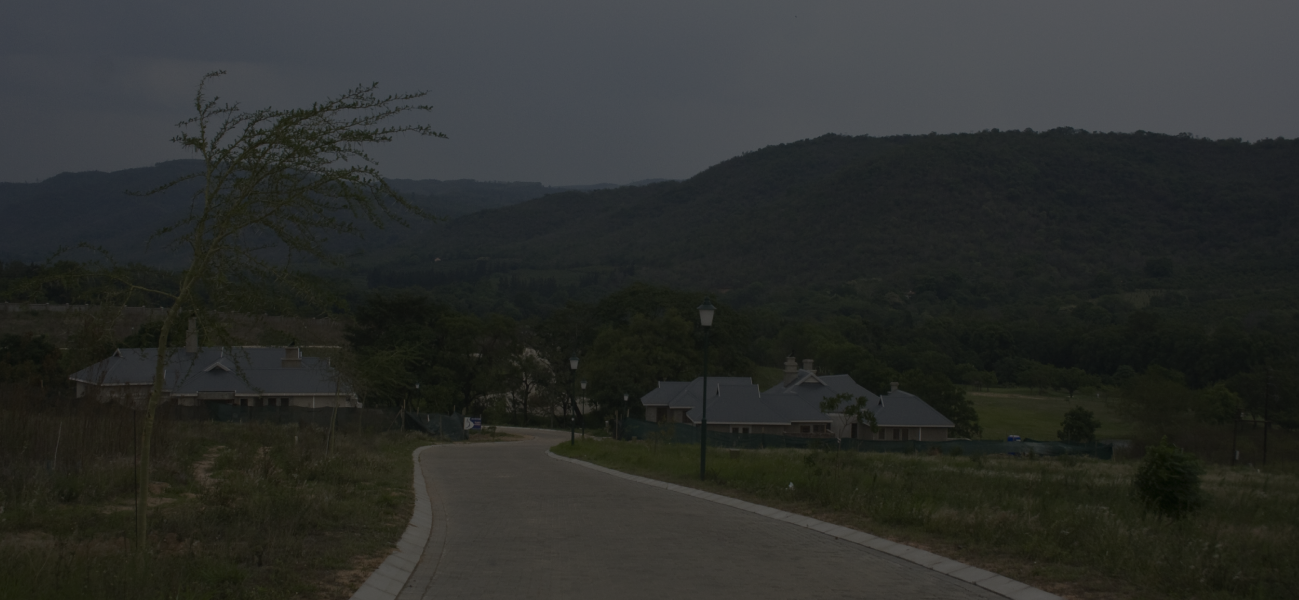
Savanna Gardens
The Savanna Gardens consist of large trees that are spaced far apart to create a typical feeling of an African plain. Trees like Paperbark Thorn (Acacia sieberiana) that are wide spreading and the Mitserie (Brideliamicrantha), Round Leaved Kiaat (Pterocarpus rotundifolius) and Silver Cluster Leaf (Terminalia sericea) could be used for shade and as a backdrop that slowly merges with the existing vegetation. Screening shrubs that can be used to hide adjacent houses and separate public from private areas are the False Olive (Buddeja saligna), the Common Wild Elder (Nuxia congesta), and the Common Crow-berry (Rhus pentheri) that is typical of Savanna areas and natural to the region.
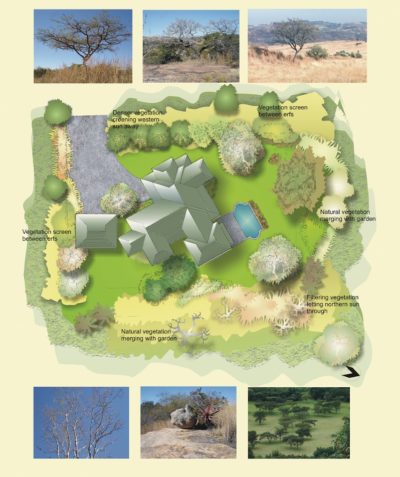
This dryer, garden is very typical of the Kruger Park Bush Veld areas and will attract birds, squirrels and lizards. Rocky areas can be imitated with a variety of succulents and/or Aloes where sought by the owner. Grassy shrubs like Miscathus species can add the grass plain feeling to the garden increasing texture and colour. Other smaller flowering groundcovers can be added as per the owner’s choice. Plants should preferably be indigenous and tying in with the existing natural vegetation.
Dry Forest Gardens
The Dry Forest Garden consist of large and decorative leaved trees like the Forest Fever tree (Anthocleista grandiflora) and the Mountain Cabbage tree (Cussonia paniculata) that add a lot of character with their special growth forms and leave shapes. These trees can be combined with bigger spreading trees like the Common Wild Fig (Ficusthoningii), Natal Mahogany (Trichilia emetica) and the Lavender Fever berry (Croton gratissimus) to create a densely knitted dry forest garden.
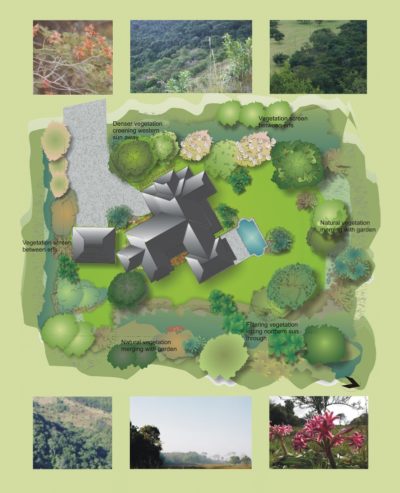
Shrubs that can be used for screening of neighbouring residences and activities include Pride of DeKaap (Bauhinia galpinii), the Weeping Sage (Buddleja auriculata) and Soap dogwood (Nolteaafricana). The different leave shapes and colours will create an appealing visual interplay. The garden includes a great amount of shadow loving shrubs with large rocks and climbers to add lushness and create a typical dry forest feel. Larger leaved groundcovers can be added including colourful lilies and other flowering plants, as per the owners choice. Plants should tie in with existing vegetation and be indigenous as far as possible.
River Or Rain Forest Gardens
The River forest Garden includes palms and ferns like the Wild Date Palm (Phoenix reclinata), Tree ferns (Cyathea dregei) and Cycads (Encephalartos sp) that give a very distinctive character to this moist garden. The garden is very densely planted with dark greens and shade loving shrubs. Large trees like the Lavender tree (Heteropyxis natalensis), the White ironwood (Vepris lanceolata), the Quinine tree (Rauvolvia caffra) and the Forest Elder (Nuxia floribunda) create clusters of shade for smaller trees and shrubs to thrive in.
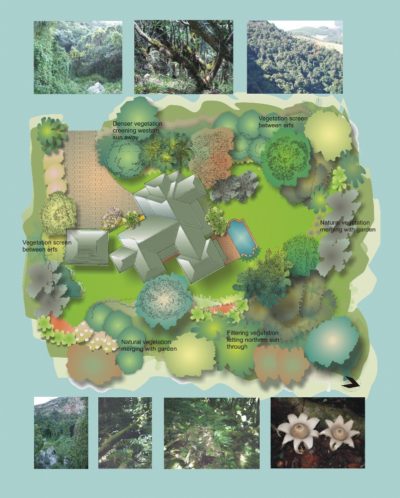
Trees and large shrubs that will screen away neighboring houses and public areas include Cape Ash (Eckebergia capensis), the Water berry (Syzygium cordatum), and White pear (Apodytes dimidiata). Water loving large leaved flowering plants like Arum lilies (Zanthedeschia aethiopica), Clivia minuata and Bird of paradise (Streletzia reginea) will attract birds and insects with their colour. Other groundcovers like Plectranthus sp., combined with ferns and Red Hot Pokers (Kniphofia preacox) to add vigour and texture to a lush and rich river forest garden. These gardens will be situated close to the dams and streams on site and therefore naturally tie in with the existing riverine vegetation.
View the list of plants in the Estate:
Any help needed?
Invest in a New Way of Life with Secure Lowveld Eco Estate Living